Concrete Repair
Diagnostic restoration of spalled concrete, rebar corrosion & structural cracks
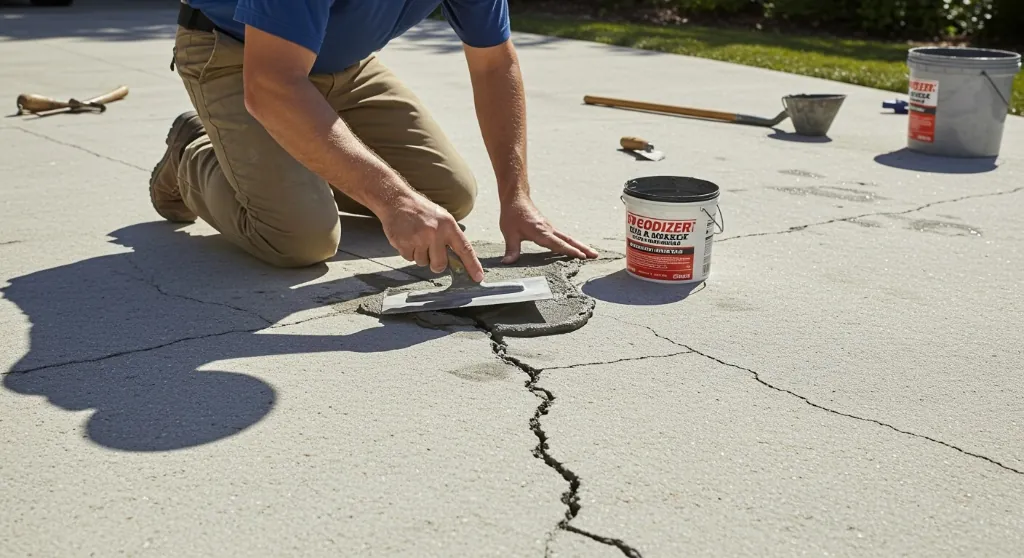
Sub-surface Degradation & Ingress Risks
Chloride attack and atmospheric carbonation depassivate rebar steel, causing expansive rust, surface delamination, spalling, and loss of structural load-bearing cross-section.
Engineered Multi-Barrier Protection
A complete restorative chemical protocol: chipping unsound concrete, applying zinc-rich rust passivators to exposed steel, and reforming sections with shrinkage-compensated polymer modified mortars.
Specified Chemical Formulations
- Vchemics Zinc-Rich Rebar Primer
- Polymer Bonding Interfacial Agent
- Structural Repair Mortar Class R4
- Anti-Carbonation Protective Topcoat
Engineered Application Scope
- Coastal building facades & balconies
- Bridge piers and crosshead beams
- Industrial chemical plant structures
- Water tower columns and elevated reservoirs
Standard Operating Protocol
4-Stage Application Methodology
Sounding & Defect Demarcation
Mapping hollow zones and removing deteriorated concrete beyond rebar depth.
Rebar Mechanical De-Rusting
Wire brushing to SA 2.5 cleanliness and immediate zinc-rich passivation.
Bonding & Mortar Application
Wet-on-wet polymer bonding coat followed by thixotropic mortar buildup.
Surface Sealing
Anti-carbonation, weather-proof protective coating system.
Site Execution Gallery
How We Worked
Step-by-step photographic breakdown of real-world site execution, obstacles managed, and progressive structural sealing.
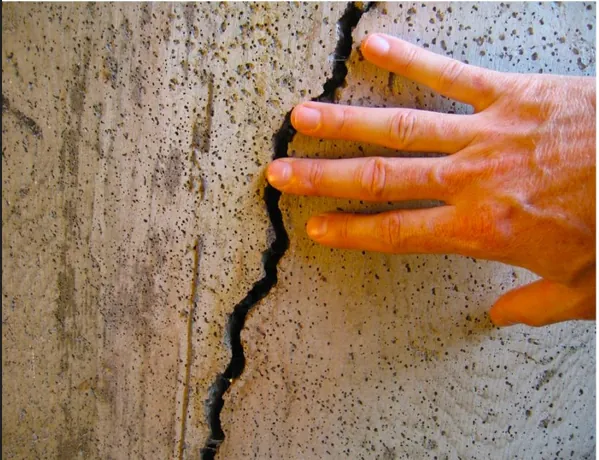
Worker assessing concrete crack width and depth with measuring tools on site
Crack Width & Depth Assessment
Crack width and depth measured and classified as structural or non-structural, determining the correct repair method before any work begins.
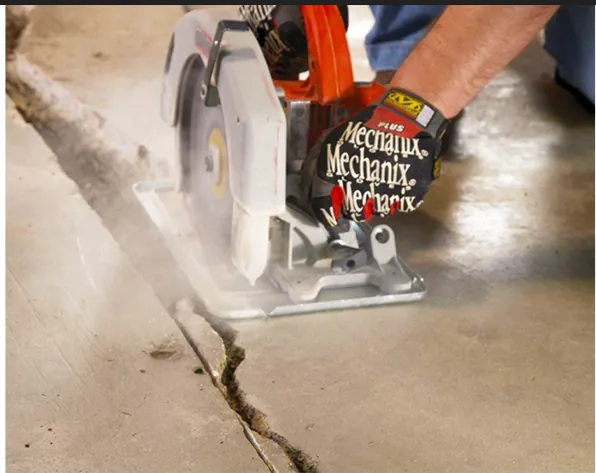
Circular saw cutting a clean V-groove channel along a concrete crack
Saw-Cutting & V-Groove Routing
The crack is routed into a clean V-groove profile, creating a mechanical key that gives the repair material a stronger bond to the surrounding concrete.
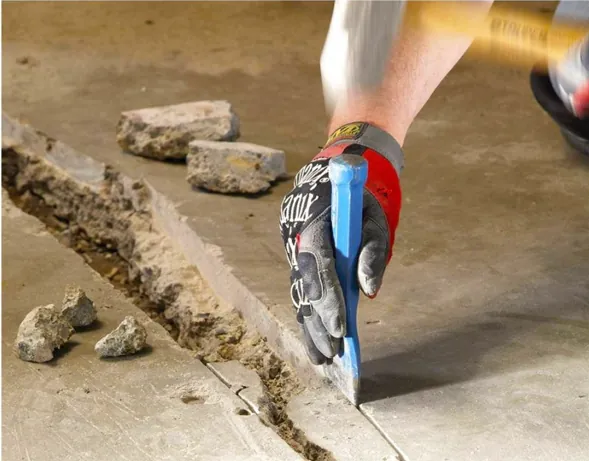
Worker removing loose debris and chiseling concrete crack channel
Debris Removal & Substrate Prep
Loose material and dust are fully cleared from the groove using mechanical tools and compressed air, ensuring the repair mortar bonds only to sound concrete.
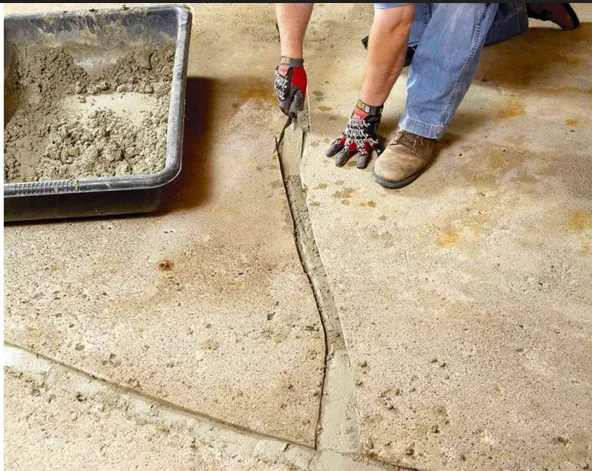
Worker troweling polymer-modified repair mortar into the concrete crack channel
Repair Mortar / Epoxy Injection
Polymer-modified repair mortar is placed in controlled lifts to fully seal the groove without trapping air voids, restoring load transfer across the repair zone.
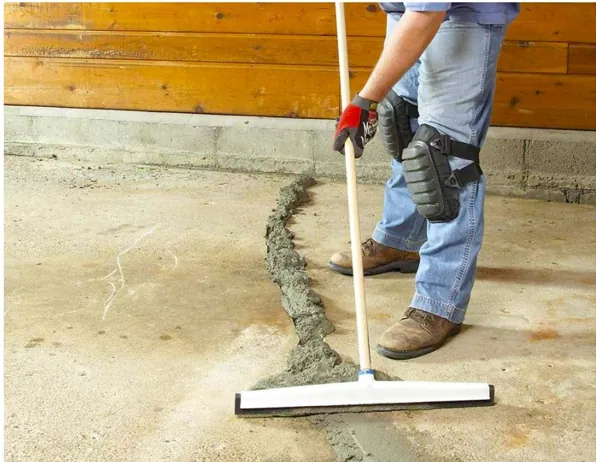
Worker leveling and smoothing the finished concrete repair mortar
Finishing & Curing
The surface is finished flush and moist-cured, restoring structural integrity with a near-invisible repair line.
EXPLORE MORE DISCIPLINES
Other Engineered Solution Protocols
Basement Waterproofing Chemicals & Sealants
Permanent deep-pore crystalline & membrane envelope against hydrostatic head
Terrace Waterproofing
Seamless elastomeric PU & acrylic coatings resistant to thermal expansion & ponding
Structural Rehabilitation
Engineered section enlargement, micro concrete encasements & load recovery
Industrial Flooring
Heavy-duty monolithic metallic floor hardeners, epoxy & polyurethane screeds
Protective & Architectural Painting
Industrial protective coatings and architectural finishes for lasting performance and appearance.
Schedule an On-Site Diagnostic Assessment
Our chemical application specialists visit your project site in Chennai or Tamil Nadu to evaluate substrate conditions, inspect water ingress sources, and prepare custom IS-compliant chemical specifications.