Basement Waterproofing Chemicals & Sealants
Permanent deep-pore crystalline & membrane envelope against hydrostatic head
How do you waterproof a basement?
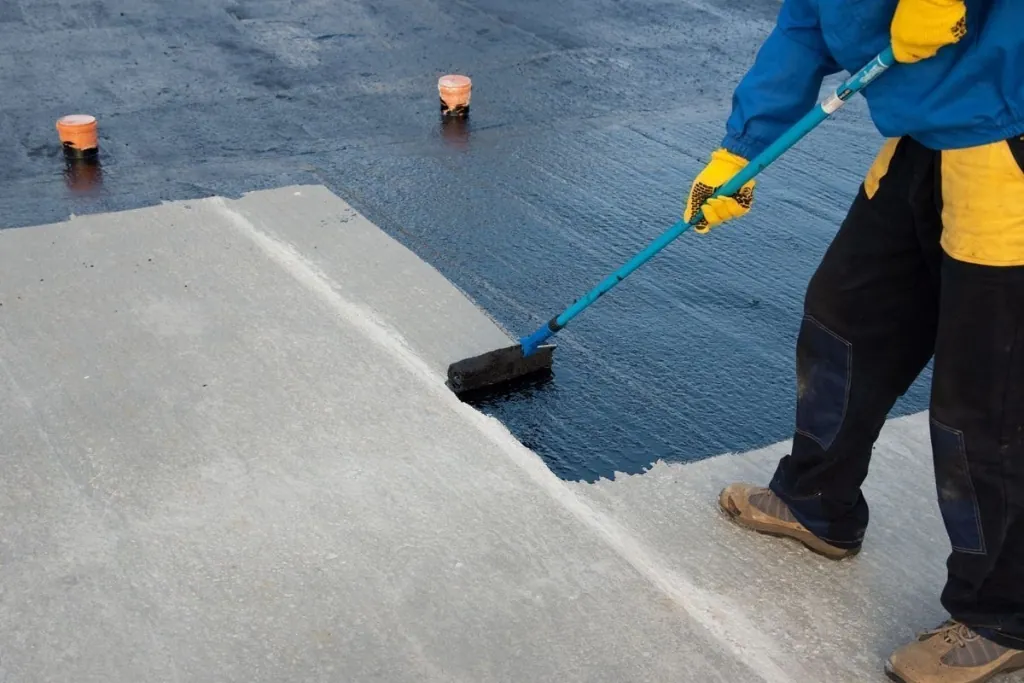
A basement is waterproofed in layers, because groundwater pushes in from below and from the sides. New basements get a crystalline admixture in the concrete, waterstops at construction joints and a coating on the walls. An existing basement that already leaks is usually sealed from the inside with PU injection in the cracks and a crystalline slurry over the surface.
Last updated:
Why do basements leak?
High water tables and sub-soil hydrostatic pressure cause continuous dampness, rebar corrosion, and structural weakness in deep subterranean concrete rafts and retaining walls.
How do we fix it?
Our dual-barrier system combines integral crystalline admixture dosing during concrete pouring with secondary flexible elastomeric slurry coatings and swellable waterstops at construction cold joints.
Which products are used?
- Vchemics Integral Crystalline Admixture
- Vchemics Crystalline Slurry Coating
- Hydrophilic Swellable Waterstop Bar
- PU Hydro-Active Leak Injection Resin
Where is it used?
- Multi-level basement parking
- Underground lift pits & sump wells
- Metro tunnels & subterranean shafts
- Commercial raft foundations
Standard Operating Protocol
How is basement waterproofing done, step by step?
Substrate & Joint Preparation
High-pressure jetting, honeycombing gouging, and rebar treatment.
Cold Joint Detailing
Installation of hydrophilic waterstops and elastomeric joint bandages.
Crystalline Matrix Layer
Dual coat deep-penetrating catalytic crystalline slurry application.
Post-Cast Quality Audit
Core moisture test & pressure grouting of micro-fissures.
Site Execution Gallery
How We Worked
Step-by-step photographic breakdown of real-world site execution, obstacles managed, and progressive structural sealing.
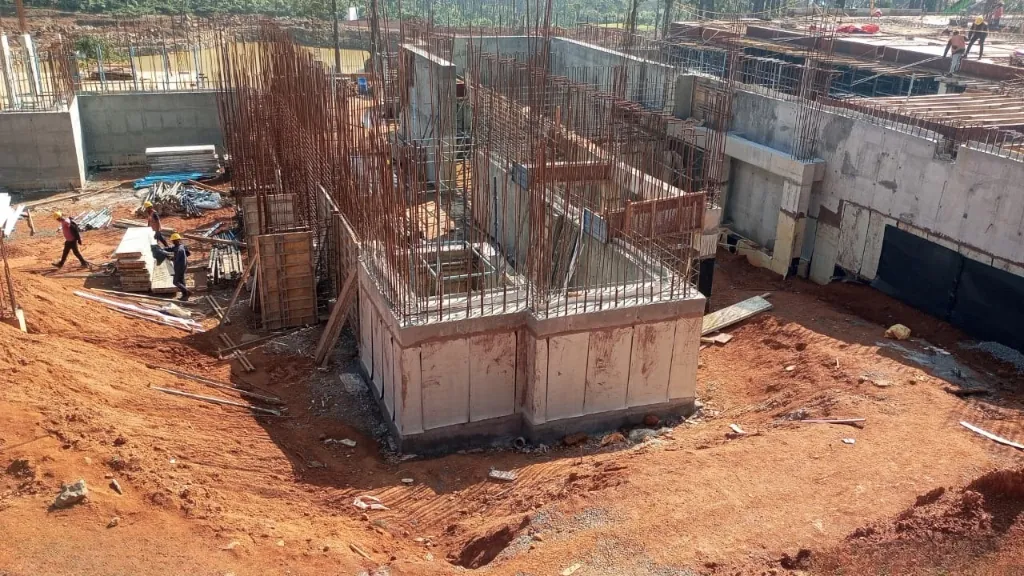
Completed RCC basement walls and column reinforcement before waterproofing
Structural Shell Complete
RCC basement walls and column starter bars cast and cured, formwork struck — structure ready to receive waterproofing treatment.
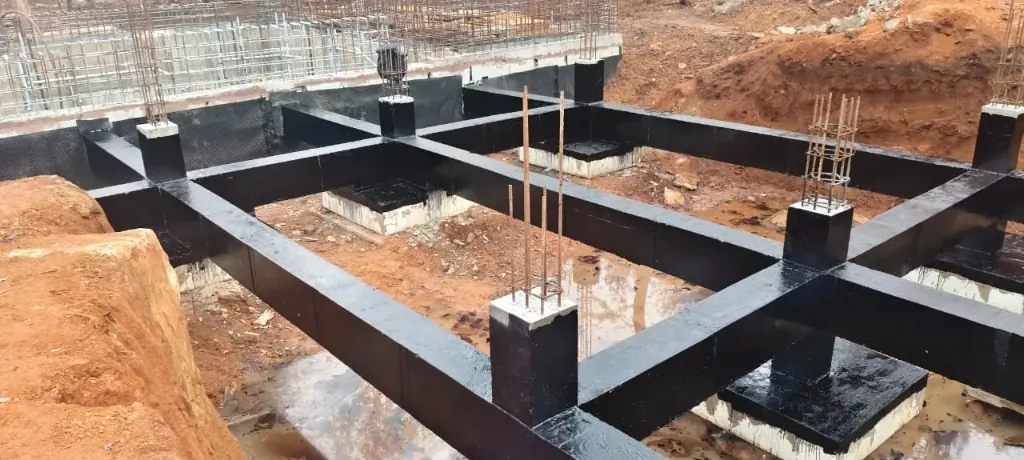
Black waterproof coating applied to foundation tie beams
Foundation Beam Waterproof Coating
Liquid-applied protective coating brushed onto plinth and tie beams and column pedestals before backfilling, sealing the horizontal foundation network.
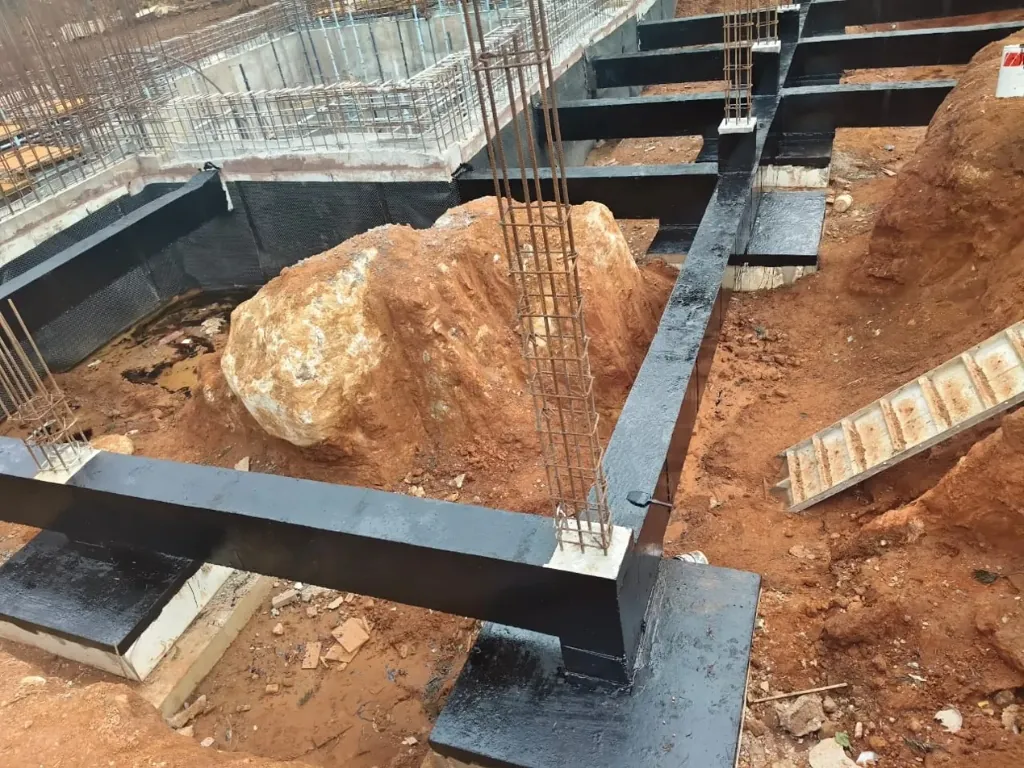
Waterproof coated foundation beams around an excavated boulder on site
Site Conditions Managed Mid-Execution
Coated beams and rising column reinforcement worked around actual excavated ground conditions — coating maintained through real-world site obstacles, not a clean textbook layout.
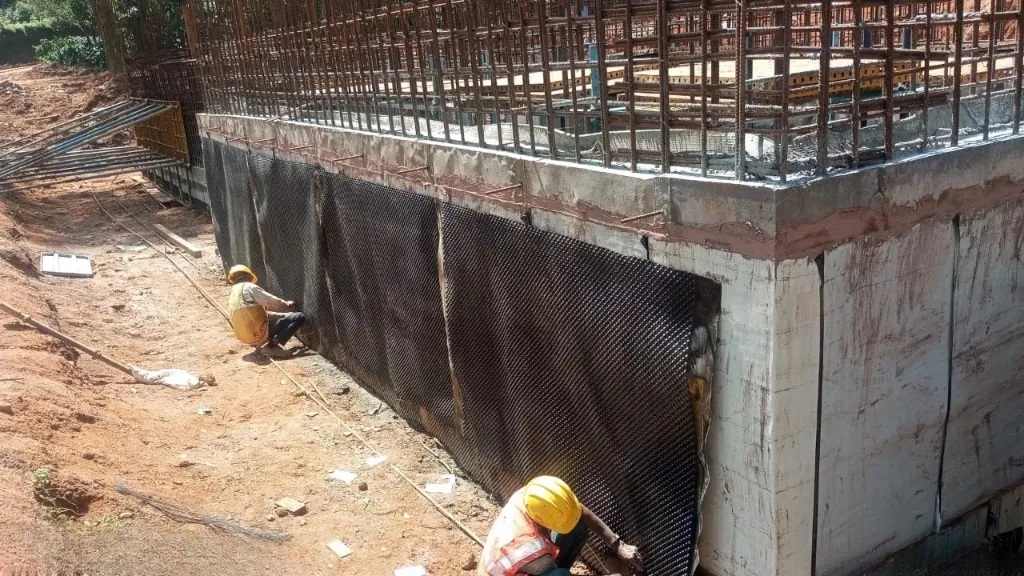
Workers installing studded waterproofing membrane on a basement retaining wall
Vertical Wall Membrane Installation
Studded protection membrane mechanically fixed to the external face of the basement retaining walls, worked in from ground level.
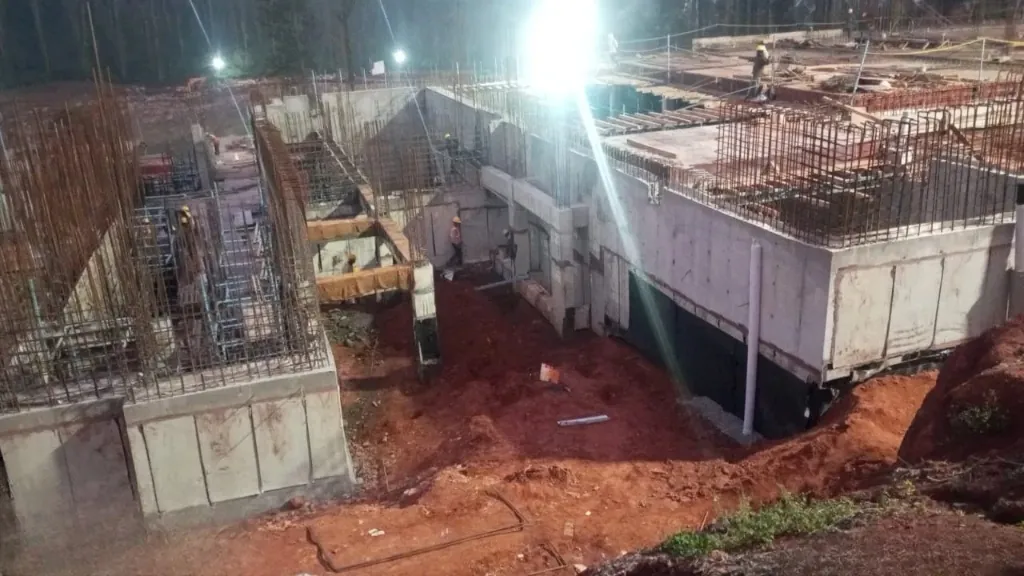
Night-time construction progress showing waterproofed basement wall base
Round-the-Clock Progress
Waterproofed wall base visible at ground level while structural work continues upward under floodlights — work didn't stop at daylight to hold the schedule.
COMMON QUESTIONS
Basement Waterproofing Chemicals & Sealants: Frequently Asked Questions
Is there a special cement for basement waterproofing?
What's the best waterproofing for basement walls?
Can a sealant alone stop basement leaks?
How do you waterproof a retaining wall?
Can basement waterproofing be done after construction?
EXPLORE MORE DISCIPLINES
Other Engineered Solution Protocols
Terrace Waterproofing
Seamless elastomeric PU & acrylic coatings resistant to thermal expansion & ponding
Concrete Repair
Diagnostic restoration of spalled concrete, rebar corrosion & structural cracks
Structural Rehabilitation
Engineered section enlargement, micro concrete encasements & load recovery
Industrial Flooring
Heavy-duty monolithic metallic floor hardeners, epoxy & polyurethane screeds
Protective & Architectural Painting
Industrial protective coatings and architectural finishes for lasting performance and appearance.
Schedule an On-Site Diagnostic Assessment
Our chemical application specialists visit your project site in Chennai or Tamil Nadu to evaluate substrate conditions, inspect water ingress sources, and prepare custom IS-compliant chemical specifications.