Terrace Waterproofing
Seamless elastomeric PU & acrylic coatings resistant to thermal expansion & ponding
What is the best way to waterproof a terrace?
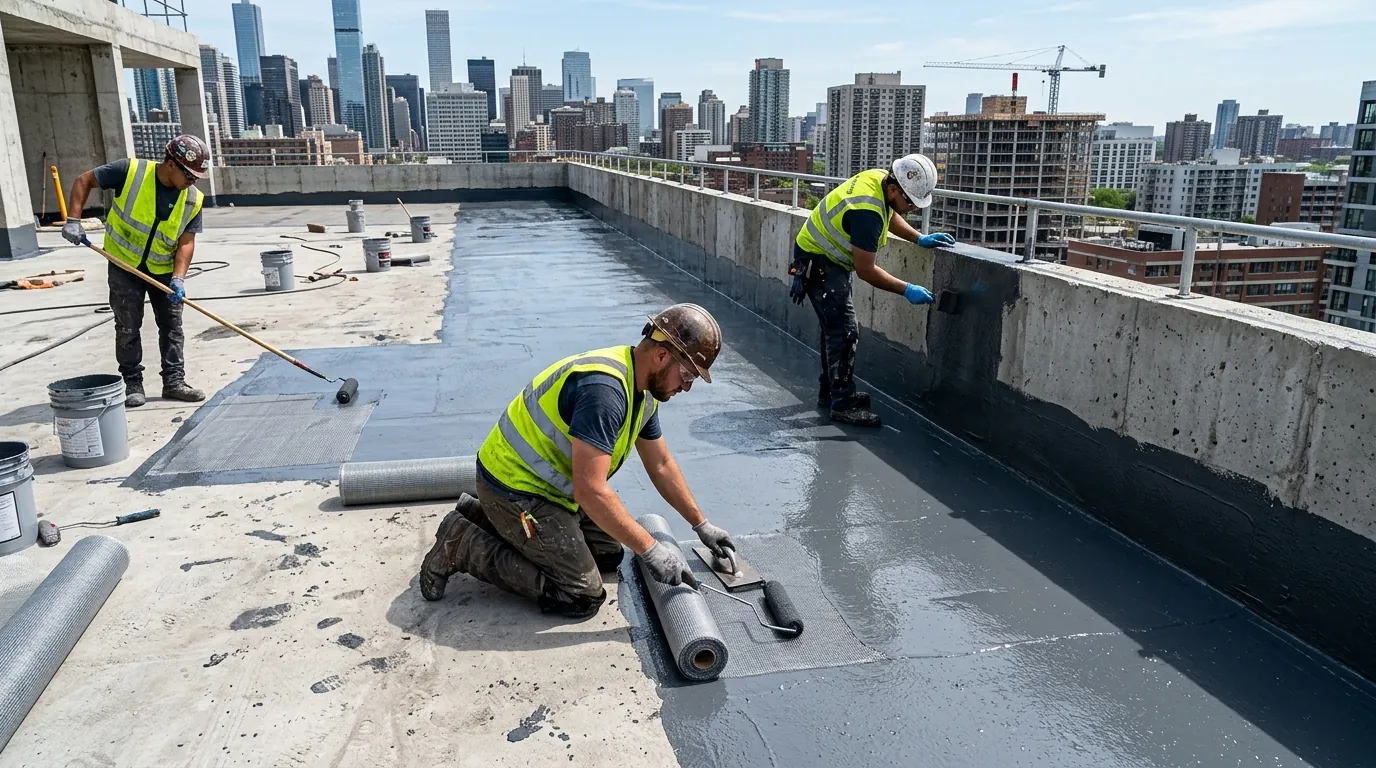
In Tamil Nadu's heat, a terrace needs a coating that can stretch. The roof slab expands during the day and shrinks at night, so rigid coatings crack. A good terrace job cleans the slab, repairs cracks, seals the joint between the parapet wall and the slab, and then applies a flexible PU or acrylic coating. The finished terrace is pond-tested before handover.
Last updated:
Why do terraces leak?
Tropical heat causes concrete slabs to expand and contract dramatically, tearing rigid coatings and causing severe ceiling leaks and damp patches in top-floor living areas.
How do we fix it?
We provide high-elongation (>400%) seamless polyurethane and reinforced polymer matrix systems that bridge dynamic thermal cracks while reflecting UV solar radiation to lower ambient indoor temperatures.
Which products are used?
- Vchemics Liquid PU Elastomeric Membrane
- Fiberglass Mesh Reinforcement Layer
- UV-Resistant Aliphatic Topcoat
- Polymer Screed Slope Mortar
Where is it used?
- Exposed residential flat roofs
- Commercial podiums and sky decks
- Green roofs & landscaped terraces
- Industrial metal / concrete composite roofs
Standard Operating Protocol
How is terrace waterproofing done, step by step?
Slope & Coving Correction
Creating minimum 1:100 drainage gradients and 75mm radius corner fillets.
Primer Impregnation
Penetrative moisture-tolerant epoxy/acrylic primer layer.
Reinforced Membrane Matrix
Multi-coat elastomeric PU embedded with 45 GSM fiberglass mesh.
Water Ponding Test
72-hour continuous water head retention inspection before handover.
Site Execution Gallery
How We Worked
Step-by-step photographic breakdown of real-world site execution, obstacles managed, and progressive structural sealing.
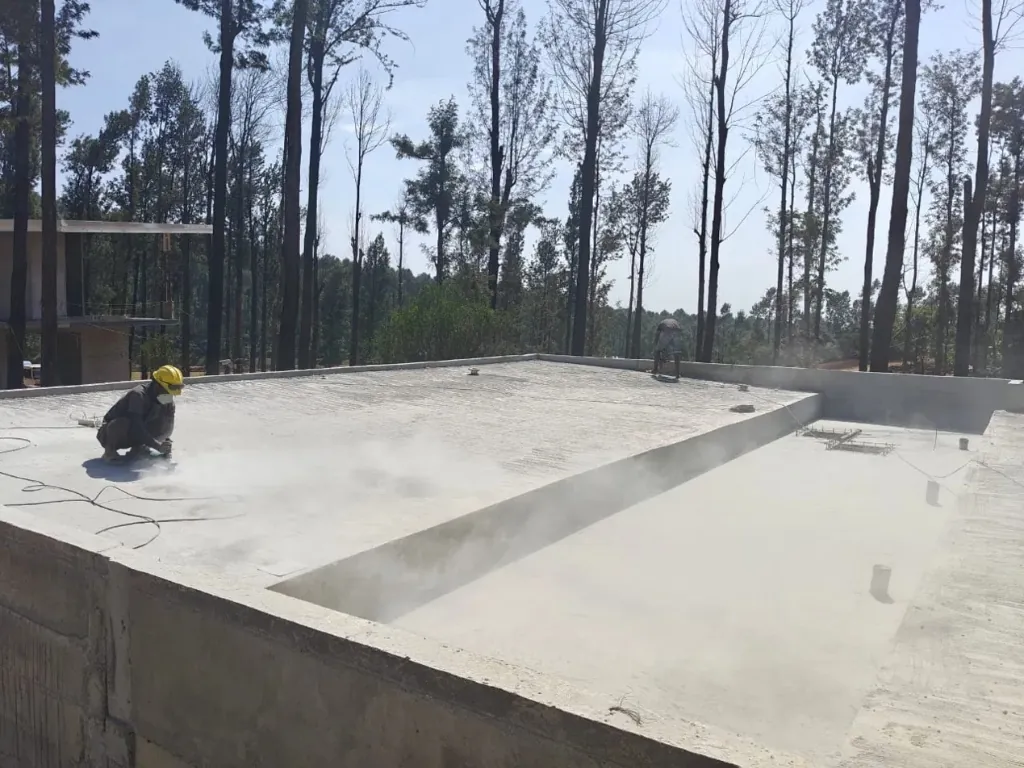
Worker grinding a concrete terrace slab surface before waterproofing
Surface Preparation
Terrace slab mechanically ground to remove laitance and surface contaminants, creating a sound, receptive substrate ahead of waterproofing application.
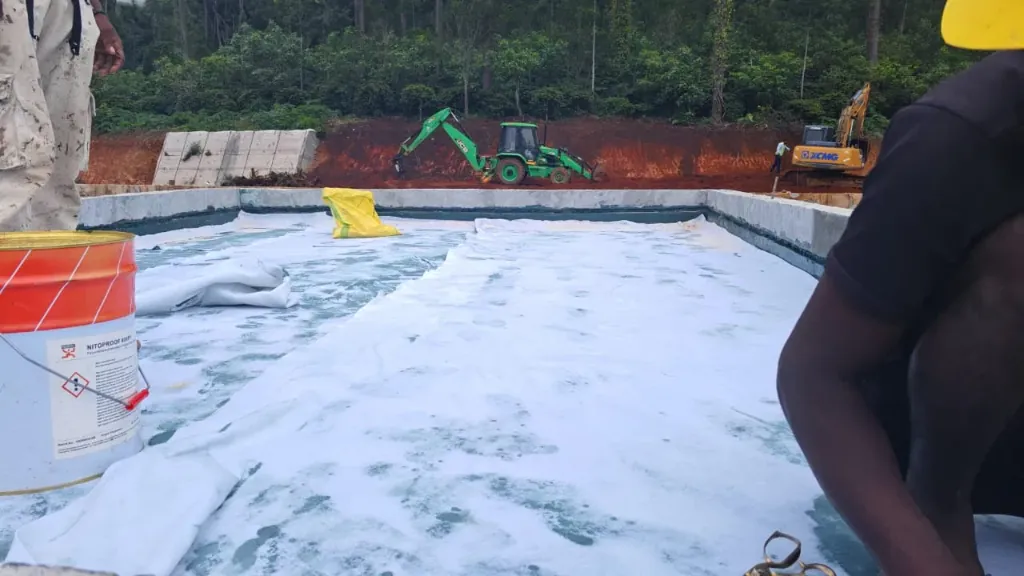
Fabric-reinforced polyurethane waterproofing membrane laid across a terrace slab
Base Membrane & Fabric Reinforcement
Nitoproof 68RFI polyurethane waterproofing system applied with fabric reinforcement bedded across the full terrace area, forming a seamless, crack-bridging base membrane.
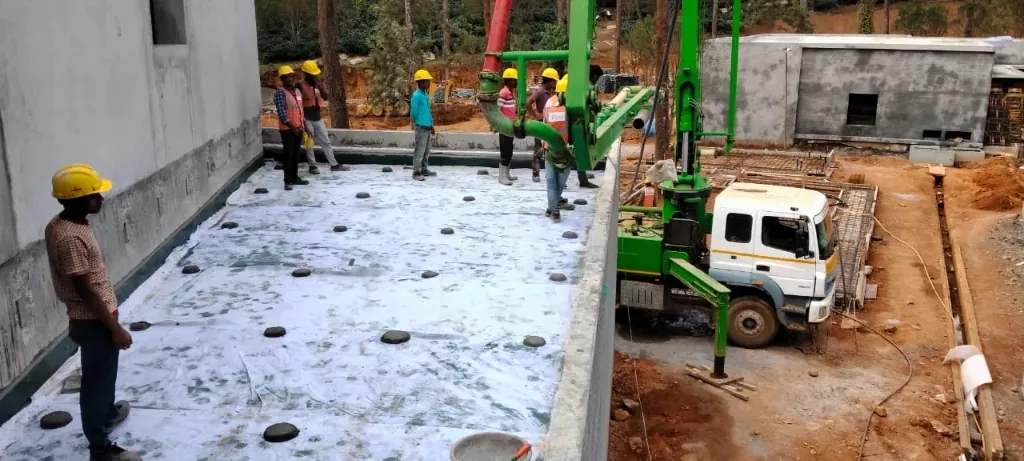
Workers placing protective screed over a waterproofed terrace using a concrete pump
Protective Screed Application
Protective screed placed over the cured membrane via concrete pump, shielding the waterproofing layer and preparing a stable base for the finish coats.
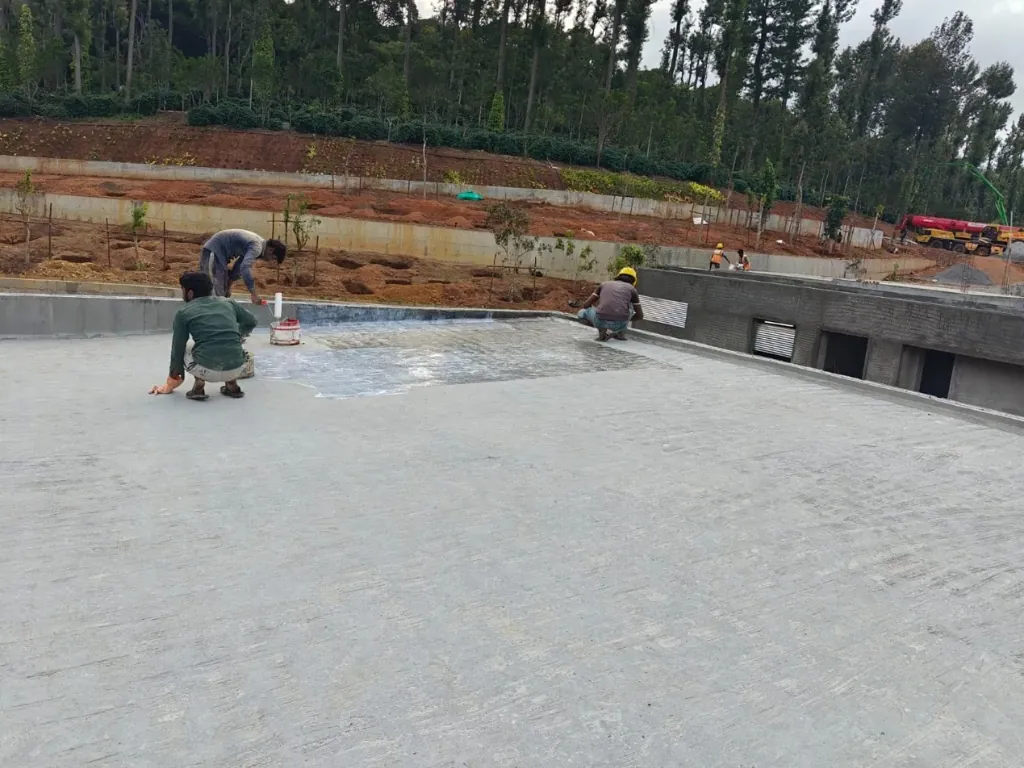
Worker rolling a textured protective topcoat onto a terrace surface
Textured Protective Topcoat
A reflective textured topcoat rolled onto the cured screed, adding surface durability and helping reduce heat absorption on the finished terrace.
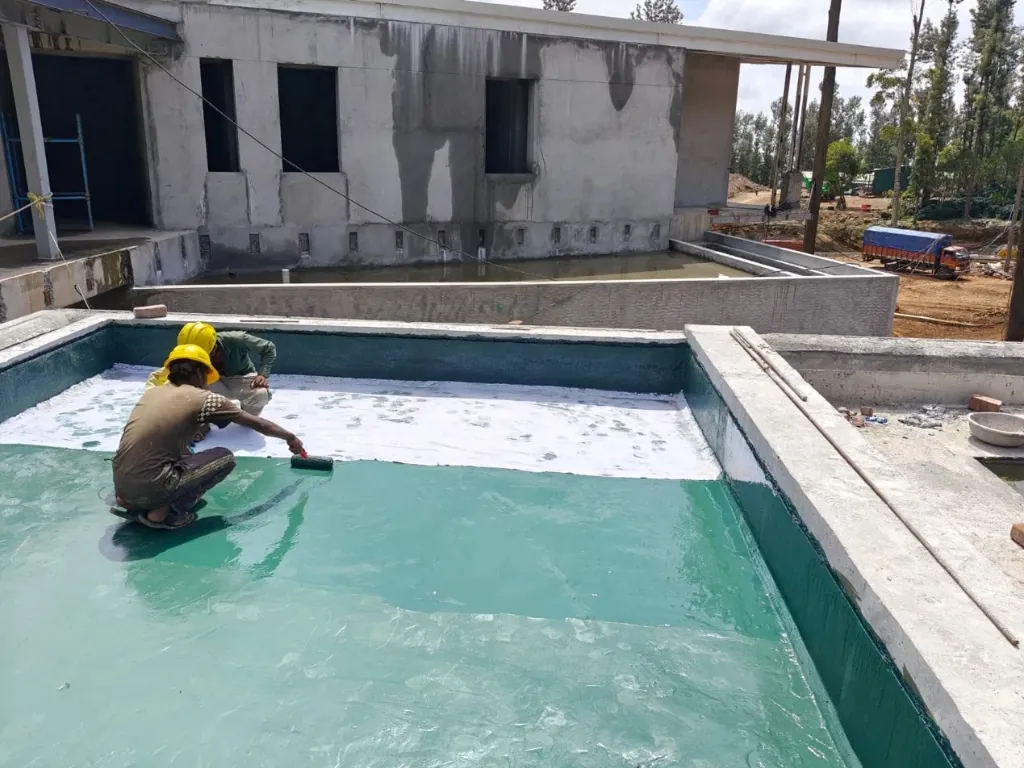
Worker applying green pigmented waterproof topcoat to a terrace and parapet wall
Final Pigmented Waterproof Topcoat
Final pigmented waterproof topcoat hand-rolled onto the terrace and parapet upstands, completing a fully sealed, UV-resistant finish.
COMMON QUESTIONS
Terrace Waterproofing: Frequently Asked Questions
Is epoxy suitable for terrace waterproofing?
Which chemical is best for terrace waterproofing?
Can you waterproof a terrace that's already leaking?
How long does terrace waterproofing last?
When is the best time to waterproof a terrace in Tamil Nadu?
EXPLORE MORE DISCIPLINES
Other Engineered Solution Protocols
Basement Waterproofing Chemicals & Sealants
Permanent deep-pore crystalline & membrane envelope against hydrostatic head
Concrete Repair
Diagnostic restoration of spalled concrete, rebar corrosion & structural cracks
Structural Rehabilitation
Engineered section enlargement, micro concrete encasements & load recovery
Industrial Flooring
Heavy-duty monolithic metallic floor hardeners, epoxy & polyurethane screeds
Protective & Architectural Painting
Industrial protective coatings and architectural finishes for lasting performance and appearance.
Schedule an On-Site Diagnostic Assessment
Our chemical application specialists visit your project site in Chennai or Tamil Nadu to evaluate substrate conditions, inspect water ingress sources, and prepare custom IS-compliant chemical specifications.